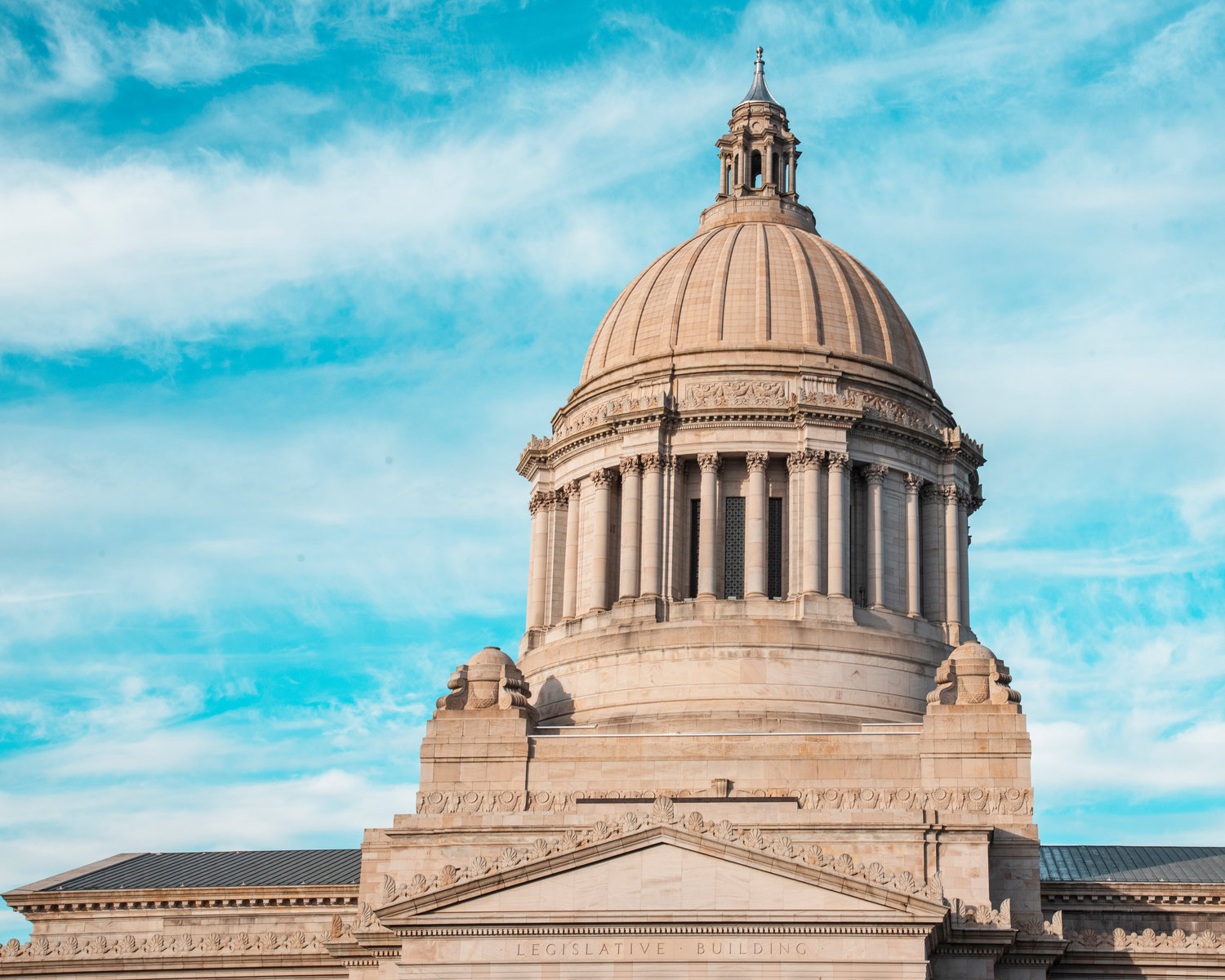
This year's legislative session in Olympia was dominated by talk of shortfalls, taxes and impacts from the Trump administration.
But, as usual, lawmakers considered many bills that cruised under the radar of anyone who isn't a legislative staffer, advocate or lobbyist. Some bills made it over the finish line, others did not. The world of transportation — one of the big mandates for the Legislature — is no exception.
"It was a busy year," said state Sen. Marko Liias, D-Edmonds, chair of the Senate Transportation Committee.
First in line was the $15 billion transportation budget, built on the back of a gas tax increase of 6 cents per gallon beginning July 1 and by tapping into the state's sales tax. The two-year budget prioritized finishing highway projects, notably the mostly completed Highway 520 replacement, the North Spokane Corridor and extensions of highways 509 and 167 in SeaTac, Fife and the Port of Tacoma.
The budget was just one of the votes lawmakers took this session. Here are some highlights:
—Habitual speeders will get a technological assist to obey the speed limit with House Bill 1596. The law will require an "intelligent speed assistance device" in the vehicles of drivers with a probationary license after a reckless driving or excessive speeding conviction, or if ordered to have a device by a court. The device will actively monitor the vehicle's speed, a type of technology used widely in Europe, and actively limit the car's speed. In 2023, 30% of fatal crashes on Washington's roads involved speeding. The law is called the BEAM Act, and is named for the four people killed in a violent car crash when another driver was going 112 mph in a 40 mph zone last year near Renton.
—Young drivers will face stiffer training requirements before they can get a license, thanks to House Bill 1878. The training will include 30 hours of classroom instruction and six hours of behind-the-wheel instruction. By 2030, anyone under age 22 will need such training to get a license. The lag time is to allow the state's driver training industry to prepare for the onslaught of new students. Nationwide and in Washington, young drivers have the highest fatal crashes per mile than any other age group.
—Much slower streets could be in the future following Senate Bill 5595, which allows cities and towns to designate "shared streets." After engineering and traffic studies, a street can be made a place where pedestrians, bicyclists and cars use the same pavement. Cities can lower speed limits on the road — which can't be a state highway or arterial road — to 10 mph. Once designated a shared street, the city must create an annual report looking at traffic accidents, speeding violations and the number of driving under the influence violations that occurred there.
—In an effort to build more homes and encourage people not to drive everywhere, House Bill 1491 is designed to spur more development close to transit stops. The law does much to promote that, including denser housing requirements, a new multifamily tax exemption for such projects, and the ability for cities to waive parking requirements at new buildings near stations.
Not everything made it over the finish line.
For Rep. Jake Fey, D-Tacoma, chair of the House Transportation Committee, the third time wasn't a charm for his per-mile road usage charge proposal, which was rejected once again by his colleagues.
A measure to lower the legal limit for drunken driving from 0.08% to 0.05% failed to gain traction, despite a 20% decrease in fatal crashes in Utah following implementation of a similar proposal.
A proposal from Rep. Greg Nance, D-Bainbridge Island, to revive a modern Mosquito Fleet of walk-on ferries on Puget Sound in House Bill 1923 died in a Senate committee despite an 87-8 House vote.
And a Senate budget item to build out a state-spanning network of bicycle highways was stripped out by House negotiators.
© 2025 The Seattle Times. Visit www.seattletimes.com. Distributed by Tribune Content Agency, LLC.



