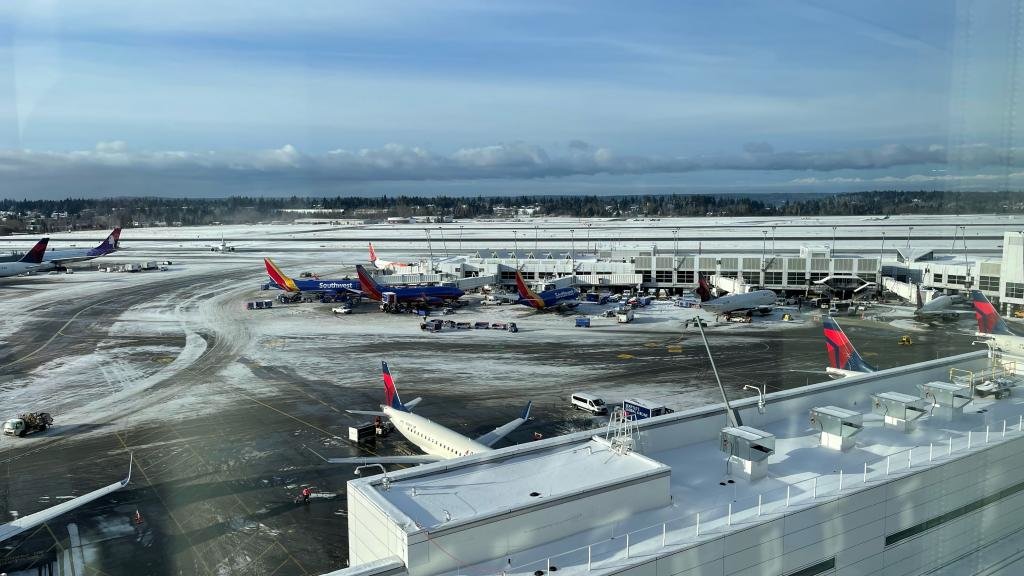
Nearly two weeks after a leak shut down the pipeline that delivers jet fuel to Seattle-Tacoma International Airport, the source of the spill remains a mystery and travelers are beginning to see complications as airlines scramble to keep their planes gassed up.
Delta Air Lines, the second-largest carrier out of Sea-Tac, reported on Sunday that it has issued travel waivers to passengers on long international flights as they may experience schedule adjustments."
A small number of domestic long-haul flights will also need to make fueling stops, a Delta spokesperson said.
Alaska Airlines, the largest carrier serving Sea-Tac, said they do not expect disruption to their operations during Thanksgiving week. But Alaska has also begun having some longer flights make refueling stops along the way, the airline said. On Sunday, about 10 Alaska flights made refueling stops.
The Olympic Pipeline, a 400-mile passageway connecting an oil refinery south of Blaine, Whatcom County, with terminals in Seattle, SeaTac, Tacoma, Vancouver, Wash., and Portland, has been shut down since a leak was discovered at a Snohomish County blueberry farm on Nov. 11.
BP, which operates the pipeline, said on Sunday that crews have excavated nearly 200 feet of pipe, but have not found the source of the leak. There is no timeline for when pipeline service will be restored, said Christina Audisho, a BP spokesperson.
Audisho said crews were working around the clock to try to find and fix the leak.
The pipeline supplies jet fuel to both Sea-Tac and Portland International Airport.
Gov. Bob Ferguson, last week, declared a state of emergency to try to help airlines get more fuel to the airport. Ferguson's proclamation suspends state rules limiting how many hours commercial vehicle operators can drive when transporting jet fuel.
Airlines are trucking in more fuel to Sea-Tac and are "ferrying" in fuel, having inbound flights fill up their tanks all the way before departing.
The state Department of Ecology said officials do not yet know how much fuel has spilled. A Department spokesperson said they have had no reports of impacts to wildlife or the nearby Snohomish River.
In a letter to BP CEO Murray Auchincloss on Friday, Sen. Maria Cantwell, D-Wash., wrote that the entire Pacific Northwest depends on Sea-Tac, which generates $17 billion in revenue for the region.
"All of this activity depends on the ability of over 1,000 airplanes to take off and land each day — which requires reliable access to fuel," Cantwell wrote. "It will take 90 trucks in a 24-hour period to deliver even half of the fuel the airport needs.
Cantwell asked about the cause of the leak, why BP didn't detect it, when the pipeline was last inspected and what the company's plans are to fix it.
Seattle Times reporter Caitlyn Freeman contributed to this article.
© 2025 The Seattle Times. Visit www.seattletimes.com. Distributed by Tribune Content Agency, LLC.



