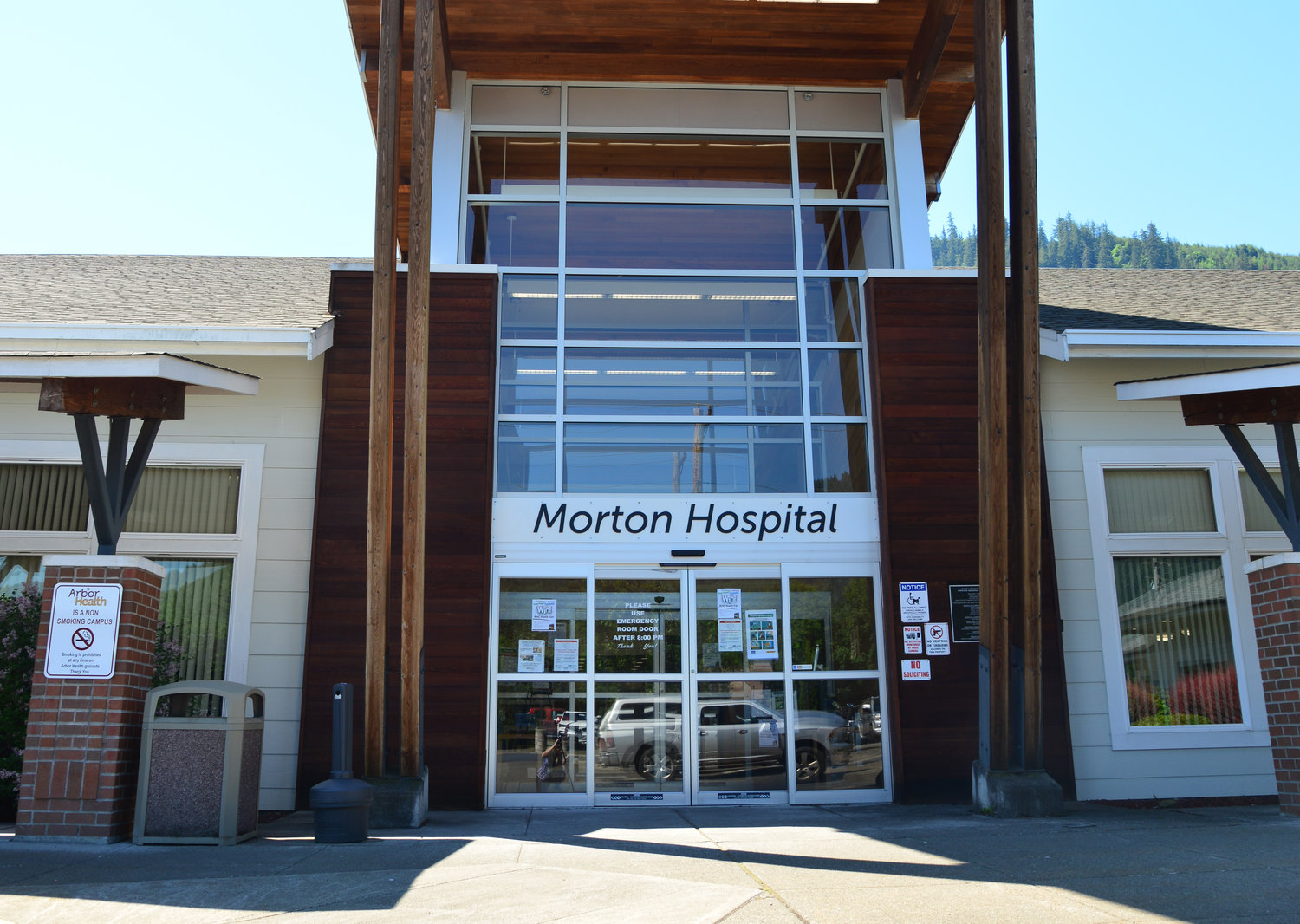
As alarm bells sound at the national level over the future of rural hospitals, local industry professionals say they are stable for now, but warn the future is uncertain.
On July 4, President Donald Trump signed an expansive piece of legislation often referred to as the “one big beautiful bill.” During the policy's time in Congress, and since its passage, critics and even some supporters have warned that new work requirements and other changes to Medicaid could have an outsized impact on the country’s rural hospitals.
Professionals with Arbor Health, which manages health care facilities in East Lewis County, say they don't expect to see impacts immediately, but the Washington State Hospital Association warns that changes not yet implemented could reduce services.
The federal legislation took a challenging path through the U.S. Congress in late spring and early summer. The legislation passed by an extremely slim margin, with the Senate requiring Vice President JD Vance to cast a tie-breaking vote to advance the bill. During the policy's time in Congress, health care providers warned of impacts to rural hospitals. Republicans ultimately passed the bill with the addition of a $50 billion fund for rural hospitals in an attempt to assuage concerns.
Findings from an independent medical research nonprofit called the Kaiser Family Foundation have warned that impacts to rural hospitals could still be profound. The group estimates that one in four adults in rural areas are covered by Medicaid and warn of the outcome if rural hospitals were to continue serving some of those same people without even the lesser payout from Medicaid and other state-sponsored insurance.
The group estimates that current changes to the program will result in $137 billion less in Medicaid funding in rural areas over the next 10 years. With the rural hospitals fund established by Congress, that leaves a gap of roughly $87 billion for American rural hospitals.
However, as these nationwide totals try to encompass the impact on rural hospitals throughout the country, the question remains: How will this impact Washington state and, more specifically, Lewis County?
According to the Vice President of Advocacy and Rural Health for the Washington State Hospital Association Jacqueline Barton True, there are not yet any immediate effects on Washington’s hospitals, but impacts may be delayed as a large portion of the changes to Medicaid will not take effect until 2028.
The Washington State Hospital Association represents more than 100 hospitals in the state, including Arbor Health Morton Hospital and Providence Centralia Hospital.
Interim Arbor Health CEO Julie Taylor told The Chronicle any potential impacts have yet to arrive, and the company does not yet expect to make any changes to staffing or any major changes to the services it already provides to the surrounding community. For now, Taylor said Arbor Health is simply looking to maintain its services at Arbor Health Morton Hospital and improve them where it can.
Taylor said the main change for Arbor Health currently is looking to be more proactive and to pinch pennies where it can in advance of any major impacts. Taylor admits the Morton hospital is reliant on Medicaid funds largely due to the demographics of the area that include an aging population, but any forecasted impacts have simply not arrived.
"We recognize that there is a potential impact that may or may not happen,” Taylor said. “At this time, we don't anticipate any interruptions to care."
Barton True expects the recent changes to eventually affect Washington hospitals in three main ways: less supplemental Medicaid funds from the federal government, more patients receiving treatment without insurance and less resources for specialist services in urban hospitals. She warns that while effects have not yet been felt, a storm may be coming.
The Washington State Hospital Association expects the recent cut to reduce the amount of Medicaid dollars going to hospitals in the state by more than $6 billion and warns that that sum is insurmountable for the state's hospitals. The Kaiser Family Foundation, an independent health research group, puts the figure in the $3 billion to $5 billion range.
“Frankly, we can’t absorb that much money, and so really hard choices will eventually have to be made about service lines,” Barton True said. “I do worry that in the long term that could lead to hospital closures.”
Barton True said her hope is that something will change between now and 2028 when the most serious changes are implemented. She added that Washington hospitals certainly hope to take advantage of funds from the $50 billion fund established by Congress. A total of $25 billion is expected to be distributed to states that apply for it, which could bring a significant amount of funding back to rural hospitals. But she added that it won't be enough, adding that she expects the money will not go solely to rural hospitals.
She added that she hopes the fate of Washington hospitals can be improved on the state level after the difficult 2025 budget season cut funding for hospitals and increased the taxes levied against them.



